
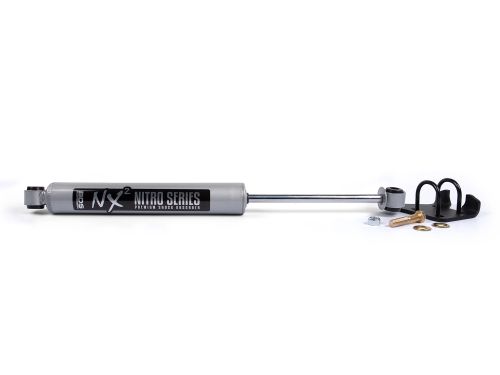
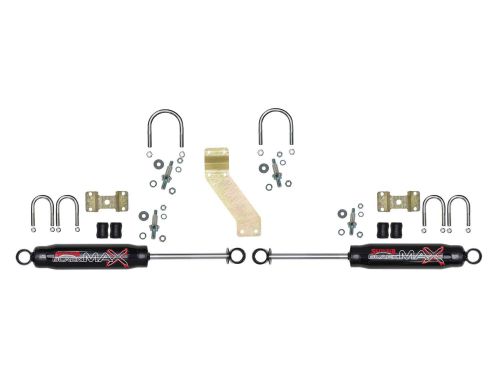
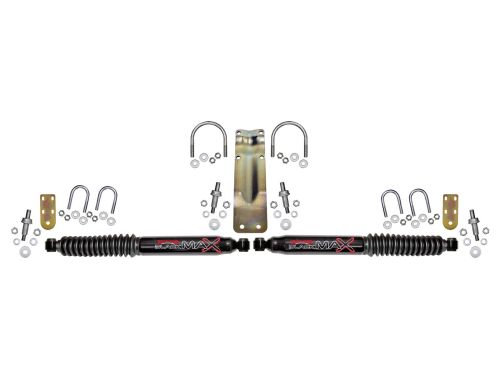
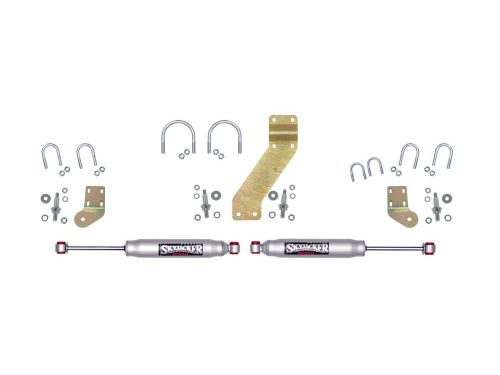
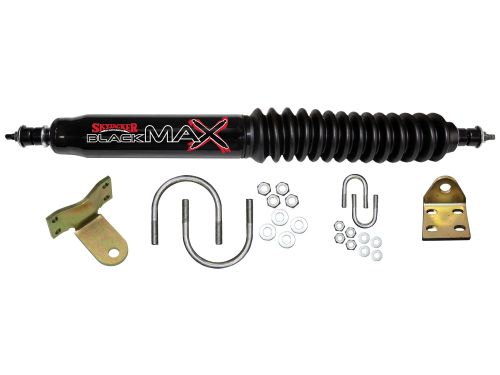
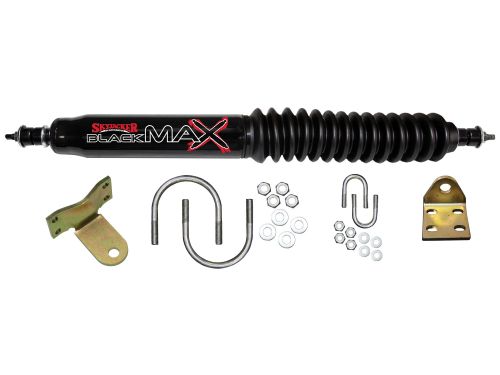
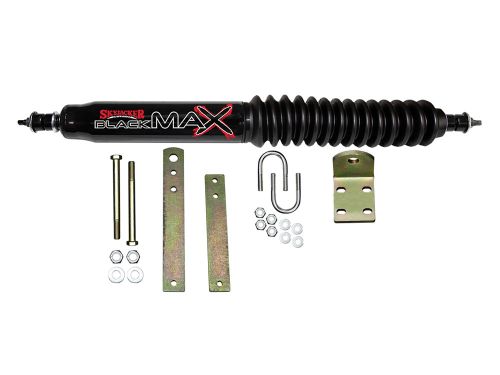
What Does a Steering Stabilizer Do?
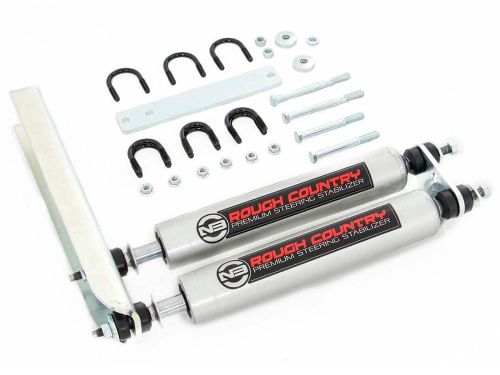
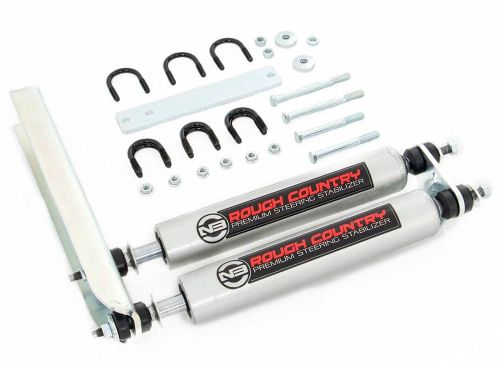
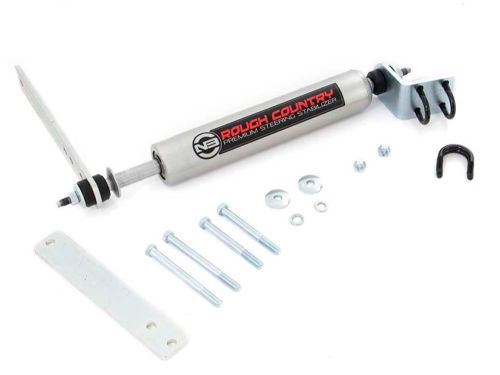
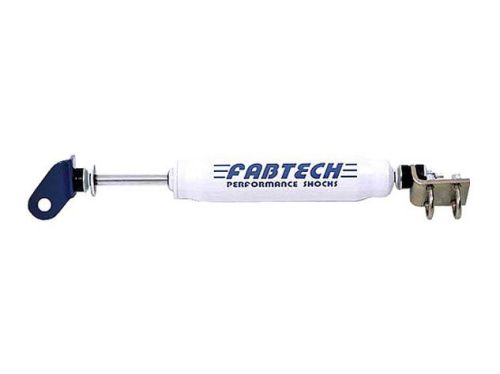
A steering stabilizer, also known as a steering damper, helps control rapid or unwanted movement within the steering system. Although it resembles a shock absorber, it is mounted horizontally and uses application-specific valving designed for steering rather than suspension movement.
When a tire encounters an obstacle, some of that force travels through the steering linkage and into the steering wheel. The stabilizer helps absorb and slow that movement, providing a more controlled steering response.
Potential Benefits
- Reduced steering kickback – Helps absorb sharp feedback from potholes, rocks, and uneven terrain.
- Improved steering control – Dampens rapid steering movement and can make the vehicle easier to keep on course.
- Less driver fatigue – Reduces the amount of correction required on rough roads and trails.
- Better control with larger tires – Helps manage the additional feedback commonly produced by heavier, oversized tires.
- Improved durability for demanding use – Heavy-duty designs are better suited to off-road, towing, and work-truck applications.
A steering stabilizer should complement a properly maintained steering and suspension system. It cannot correct worn parts, poor alignment, improper suspension geometry, or tire-related problems.
Single vs Dual
The best configuration depends on the vehicle and how it is used. Two stabilizers are not automatically better than one.
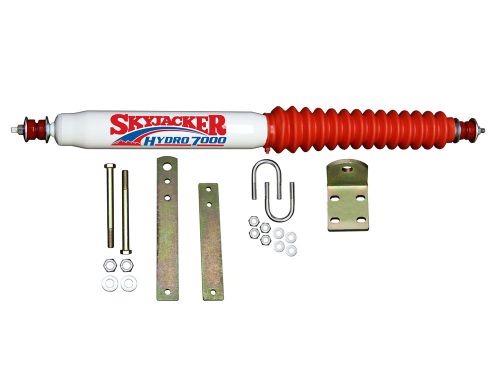
Single Stabilizers
A single stabilizer is commonly used for:
- Stock or moderately modified vehicles
- Daily-driven trucks and Jeeps
- Factory-size or moderately larger tires
- Replacing a worn factory damper
- Vehicles designed for a single mounting position
A high-quality single stabilizer can provide excellent control without making the steering feel unnecessarily heavy.
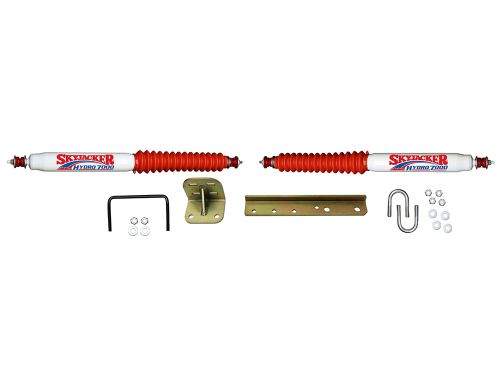
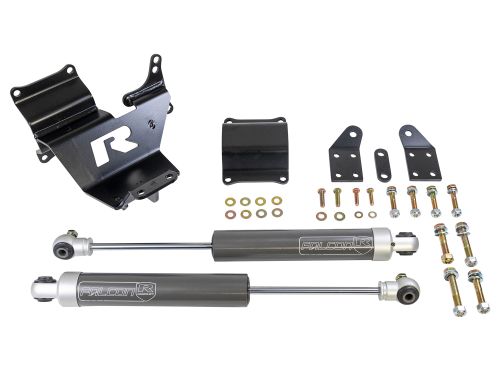
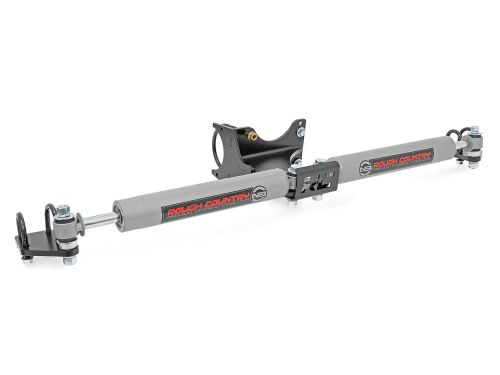
Dual Stabilizers
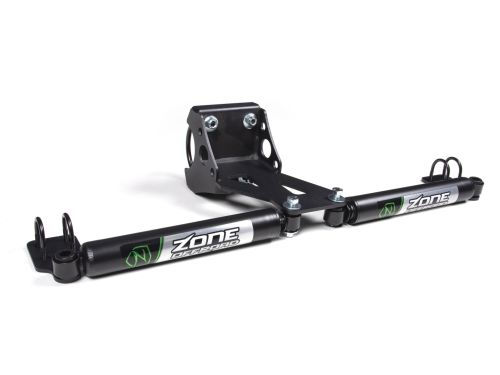
Dual kits use two dampers and are commonly selected for:
- Trucks and Jeeps with substantially oversized tires
- Heavy-duty steering and suspension builds
- Frequent off-road driving
- Applications specifically engineered for opposing stabilizers
- Drivers seeking additional damping or a more aggressive appearance
The stabilizer valving and mounting geometry should match the application. Too much damping can make steering feel heavy or slow its return to center.
Types
OE-Style Replacement
OE-style replacements install in the factory mounting location and restore or improve the damping provided by the original stabilizer. These are practical choices for daily drivers and lightly modified vehicles.
Heavy-Duty
Heavy-duty designs may use larger cylinders, stronger shafts, upgraded bushings, and improved heat management. They are well suited to lifted vehicles, oversized tires, towing, and rough-terrain use.
Through-Shaft
A through-shaft design allows the shaft to pass through both ends of the stabilizer. This helps balance fluid displacement and can produce more consistent damping in both steering directions.
Popular examples include select FOX ATS and TS steering stabilizers and Falcon Nexus steering stabilizers.
Adjustable
Adjustable dampers allow steering resistance to be tuned for tire size, road conditions, or driver preference. These are useful for vehicles that alternate between highway travel, towing, and off-road driving. Most use an external knob that allows for quick adjustments to fine-tune damping.
High and Low Mount
Carli Suspension offers Ford Super Duty and Ram heavy-duty applications for their high-mount, low-mount, or combined stabilizer systems. These configurations use application-specific brackets and may be designed to work with factory or upgraded steering components. The nitrogen gas pressure in low and high-mount cylinders provides counteractive stabilization capabilities. They can be configured for a neutral setting or fine-tuned to address radial pull in either direction.
Popular Applications
Ford F-250 and F-350 Super Duty
Heavy-duty Ford trucks are among the most popular applications for replacement and upgraded steering stabilizers. Available configurations include OE-style replacements, dual kits, high-mount systems, and premium adjustable stabilizers.
Super Duty owners commonly combine stabilizers with adjustable track bars, heavy-duty tie rods, ball joints, and other steering upgrades when running suspension lifts and larger tires.
Ram 2500 and Ram 3500
Ram heavy-duty trucks are available with single, dual, and specialty high- or low-mount systems. A properly selected stabilizer can help control the additional steering feedback created by heavier tires and demanding driving conditions.
Related upgrades may include adjustable track bars, radius arms, heavy-duty ball joints, and complete steering upgrade kits.
Jeep Wrangler and Gladiator
Steering stabilizers are widely used on lifted Wrangler and Gladiator models. Options range from direct-fit replacements to adjustable through-shaft systems developed for modified Jeeps running larger tires.
A stabilizer should be selected only after confirming that the vehicle’s track bar, tie rod ends, drag link ends, ball joints, wheel bearings, alignment, and tires are in good condition.
Other Trucks, Jeeps, and SUVs
Steering stabilizers are also available for select older trucks, Jeeps, and SUVs with compatible solid-front-axle steering systems.
Most late-model half-ton trucks, midsize trucks, and SUVs use independent front suspension with rack-and-pinion steering and generally do not have a conventional mounting location for an aftermarket stabilizer.
Popular Brands
- FOX – Premium aluminum-body stabilizers, including single, dual, TS through-shaft, and adjustable ATS options for select applications.
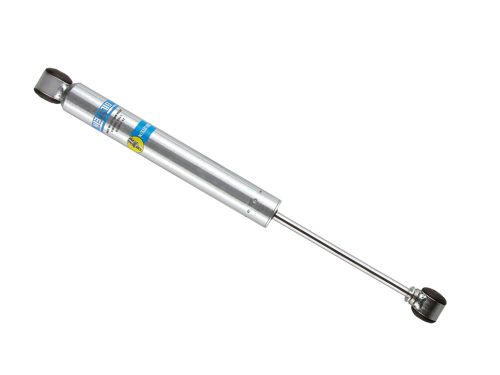
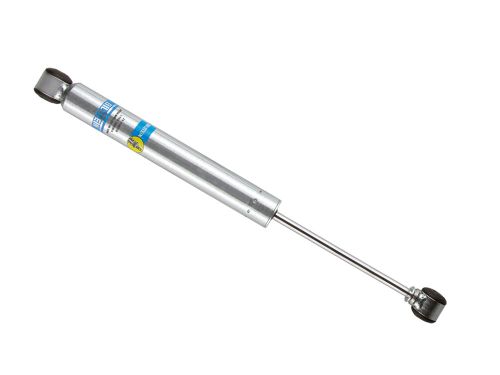
- Bilstein – Monotube stabilizers featuring application-specific valving and durable zinc-plated finishes.
- Zone Off-Road - Large line of complete kits for full-size trucks and SUVs.
- Falcon – Nexus stabilizers for select Jeep Wrangler and Gladiator models, including fixed and fast-adjust designs.
- Skyjacker – Single and dual kits for a broad range of stock and lifted trucks, Jeeps, and SUVs.
- BDS Suspension - High-quality kits with a wide range of applications
- Carli Suspension – Premium high- and low-mount systems for select Ford Super Duty and Ram heavy-duty applications.
When Should a Steering Stabilizer Be Replaced?
A steering stabilizer can lose damping performance through age, heavy use, corrosion, or trail damage.
Inspect the stabilizer if you notice:
- Increased steering-wheel feedback
- Reduced control on rough surfaces
- Fluid leaking from the cylinder
- A bent, scratched, or damaged shaft
- Worn or deteriorated mounting bushings
- Loose mounting hardware
- Clunking or movement at the stabilizer mounts
Drifting, pulling, vibration, and loose steering can have many causes. Inspect the full steering and suspension system before assuming the stabilizer is responsible.
Choosing the Right One
Consider these factors before selecting a replacement or upgraded system:
- Vehicle year, make, and model
- Factory and aftermarket mounting locations
- Tire size and tire weight
- Suspension lift height
- Daily driving, towing, or off-road use
- Single, dual, or through-shaft configuration
- Fixed or adjustable damping
- Compatibility with aftermarket steering linkage
Always verify whether the stabilizer includes the required mounting brackets and hardware. Some products reuse the factory mounts, while complete kits may include vehicle-specific brackets.
Related Steering and Suspension Upgrades
A stabilizer works best when the rest of the steering and suspension system is properly maintained. These related upgrades can improve strength, geometry, and overall handling:
- Heavy-Duty Tie Rods – Strengthen steering linkage that may be placed under additional load by larger wheels and tires.
- Drag Links – Transfer steering input to the wheels and are commonly upgraded on modified solid-axle trucks and Jeeps.
- Adjustable Track Bars – Re-center the axle after lifting and help maintain proper axle positioning beneath the vehicle.
- Heavy-Duty Ball Joints – Provide additional durability for vehicles equipped with larger wheels, tires, and suspension modifications.
- Steering Upgrade Kits – Combine compatible tie rods, drag links, and related hardware into a more complete steering solution.
- Suspension Lift Kits – Increase ride height and tire clearance with vehicle-specific suspension components.
- Radius Arms – Help maintain caster, suspension geometry, and axle control on applicable solid-axle trucks.
- Steering Correction Components – Drop pitman arms, raised steering arms, and related parts help correct steering geometry on applicable lifted vehicles.
- Extended Sway Bar End Links – Help maintain proper sway bar positioning and function after suspension height is increased.
Will a Steering Stabilizer Fix Death Wobble?
A steering stabilizer may reduce the intensity of steering oscillation, but it should not be treated as a cure for death wobble.
Death wobble is commonly associated with looseness, wear, improper alignment, or incorrect suspension geometry involving components such as:
- Track bar bushings, joints, brackets, or mounting bolts
- Tie rod ends
- Drag link ends
- Ball joints
- Wheel bearings
- Control arm or radius arm bushings
- Caster, toe, or other alignment settings
- Tire condition, balance, or pressure
Installing a stronger stabilizer without correcting the underlying issue may reduce the symptoms while leaving the actual cause unresolved.
FAQs
Does every lifted vehicle need a steering stabilizer?
No. Compatibility and need depend on the vehicle’s steering design. Stabilizers are most common on solid-front-axle trucks and Jeeps. Many vehicles with independent front suspension and rack-and-pinion steering do not use them.
Do I need dual stabilizers with 35-inch tires?
Not necessarily. Tire size is only one consideration. Tire weight, vehicle design, steering condition, driving style, and stabilizer quality also matter. A premium single stabilizer may be sufficient for many 35-inch-tire applications.
Can I install it myself?
Many factory-location replacements and bolt-on kits can be installed with common hand tools. Dual, high-mount, and through-shaft systems may require additional brackets, careful positioning, or professional installation.
Will it correct alignment?
No. A stabilizer dampens steering movement but does not change toe, caster, camber, or axle position. Alignment and suspension geometry must be corrected separately.
How long does a steering stabilizer last?
There is no universal replacement interval. Inspect it periodically for leaks, shaft damage, worn bushings, loose mounts, and reduced damping. Vehicles used frequently off-road may require more frequent inspection.